
 Search


On learning how to learn


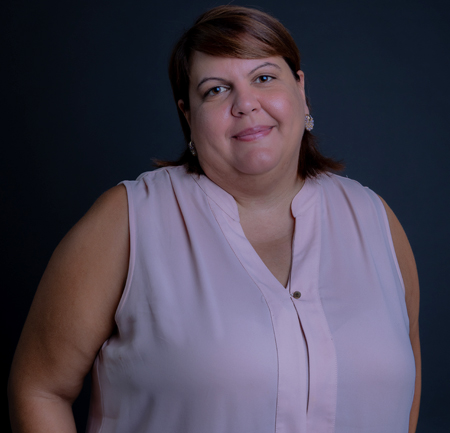
Dr Kallia Paridi explains why mistakes are valuable opportunities for learning and growth.
The latest PISA 2025 results in Cyprus have once again brought to the fore the debate about the knowledge and skills young people acquire by the time they complete their school education, particularly in subjects such as Mathematics and Science. This debate is also highly relevant to universities, which welcome students from diverse educational backgrounds, with different learning experiences and varying access to educational opportunities.
Yet the question is not simply what students already know, but also how they think and approach challenges, as well as how they can develop their potential.
When asked what advice he would give to young students, Nobel Prize-winning physicist Kip Thorne said: “You have to find your own way of learning and experiment with different ways of acquiring knowledge. Everyone is different. My mind, for example, is ‘slower’ than those of my colleagues. I discovered this during my first year at university, when I was struggling. But I found my own ways of learning, and this enabled me to succeed, even though my mind worked at a slower pace. We can all succeed in different ways.”
Thorne’s experience highlights an important aspect of learning: struggling with a subject does not necessarily mean that a student has limited ability. On the contrary, it can be the starting point for discovering new ways of learning.
This is precisely the relationship with learning that Frederick University seeks to foster through a different approach to first-year Mathematics and Physics. The emphasis is not only on what students learn, but also on how they learn.
"Many young people arrive at the University already holding beliefs such as “I’m not good enough at Mathematics”, “Physics scares me” or “I never understood why Mathematics matters”. Such beliefs are often accompanied by anxiety, fear or insecurity and can significantly affect their academic journey. We asked ourselves whether we can change this relationship with learning", says Dr Kallia Paridi, a Physics Educator and Learning Scientist.
Dr Parisi teaches two first-year courses, one in Mathematics and one in Physics, which aim to help students not only strengthen specific areas of knowledge, but also develop new ways of thinking, problem-solving and managing challenges. Stronger academic preparation can help students make a smoother transition into demanding programs of study, such as Frederick University's Mechanical Engineering and Civil Engineering. The aim is to help new students strengthen their learning skills and gradually develop the tools they need to meet the demands of their studies.
“We assess first-year students’ knowledge before they begin their studies and offer two targeted courses during the first year to those who need them. The courses develop metacognitive and scientific skills through Mathematics and Physics,” explains Dr Paridi.
"The courses give students time to move gradually from thinking, 'I can’t find the solution', to asking a more productive question: 'What do I know so far, and what alternative approach could I try?' This may seem like a small shift, but it is significant from an educational perspective. The focus moves away from making a fixed judgement about one’s abilities and towards exploring the strategies available."
As Dr Paridi further notes: "Our approach is not simply about strengthening existing knowledge. We want our students to develop metacognitive awareness and gain a better understanding of how they learn: how they approach a problem, how they justify their reasoning based on evidence, how they learn from mistakes and when they need to change their strategy.”
For a future engineer, the ability to reassess an approach, use data, recognise the limitations of a strategy and explore alternative solutions is more than just a learning skill. It is an essential part of the way engineers are expected to think.
The value of reflection
Reflection is central to this approach.
“Students need to be able to pause and ask themselves: What do I know? Where exactly am I struggling? What led me to this solution? Could I approach it differently? Whether they are working on a Mathematics problem or, later on, making a complex engineering decision, reflecting on their own thinking is an important part of their development,” says Dr Paridi.
Feedback goes beyond simply identifying an answer as right or wrong. It also focuses on the process that led to the answer, gradually helping students become more independent in their learning.
What if mistakes are part of the solution?
Mistakes have value in the learning process when they are not treated as a final outcome, but as a source of information.
“Removing the stigma associated with mistakes does not mean lowering expectations,” Dr Paridi emphasises. “It means creating an environment where students can try, reassess their approach and understand why it did not work. They can collaborate, exchange ideas and investigate the nature of the obstacle or the reason behind the mistake. A mistake can become the starting point for deeper understanding when it is followed by exploration and meaningful feedback.”
This process helps students develop academic resilience. This is not simply about persevering in the face of difficulty, but about being able to cope with setbacks, seek feedback, adapt strategies and move forward with a better understanding of their strengths and needs.
At the same time, students begin to develop their academic identity: not merely as individuals expected to pass their courses, but as future engineers learning to think critically, investigate, justify their reasoning and solve problems.
 View all articles