
 Search



Opening Address by Shipping Deputy Minister, Ms Marina Hadjimanolis, at the Blue Limassol Forum 2026


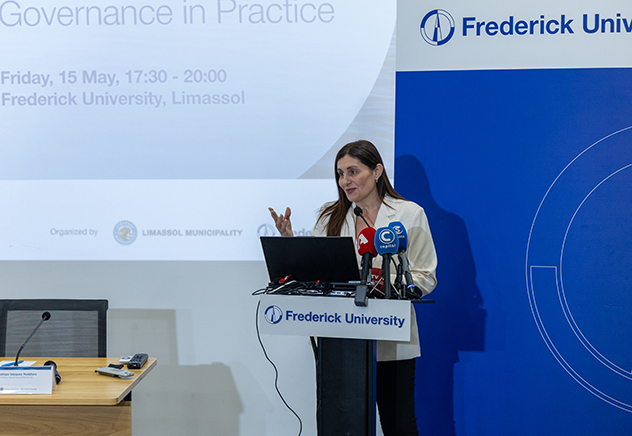 It is a great pleasure to join you at the Blue Limassol Forum 2026 and to address such a distinguished gathering of representatives from the government, academia, industry, local authorities and civil society.
I would like to congratulate the organisers for bringing together so many key stakeholders under a theme of real importance: “From Commitment to Integrated Coastal Governance in Practice.” This theme is timely, relevant and essential for the future of Cyprus.
As an island nation, the sea is not simply part of our geography; it is part of our identity, our history and our economic future. Our coasts are where communities thrive, tourism flourishes, trade is facilitated and maritime innovation takes root.
At the same time, they are under increasing pressure from climate change, urbanisation, environmental degradation and competing demands for land and marine resources.
This reality calls for a new model of governance, one that is integrated, forward-looking and collaborative.
Integrated coastal governance means recognising that the sea and the land are deeply interconnected. It requires us to move beyond fragmented approaches and towards stronger coordination across institutions, sectors and levels of government.
Cyprus is already advancing in this direction through its National Maritime Spatial Plan, which provides a structured and forward-looking framework for the sustainable and coordinated management of maritime activities, while ensuring that land–sea interactions are effectively integrated into national planning.
However, planning alone is not enough. Implementation, coordination and effective monitoring are equally critical. For Cyprus, and particularly for Lemesos, as our principal maritime city, this is of strategic importance.
Lemesos has long been at the heart of Cyprus’ maritime success story. It is home to one of the leading shipping clusters in the Eastern Mediterranean, a dynamic port, innovative businesses and a strong academic and research community. It is therefore fitting that this city becomes a model for integrated coastal governance and sustainable blue growth.
The Shipping Deputy Ministry of the Republic of Cyprus remains fully committed to supporting policies that strengthen environmental responsibility, maritime innovation, digital transformation and resilience across our coastal and shipping sectors. We are working closely with national and European partners to ensure that Cyprus remains a competitive maritime centre while also leading in sustainability.
In this context, I would also like to highlight the initiative of the Shipping Deputy Ministry for the establishment of a dedicated Committee for the Protection of the Sea from Pollution. This important initiative reflects our determination to enhance coordination among all relevant stakeholders, strengthen prevention mechanisms and ensure a rapid and effective response to environmental challenges affecting our marine areas.
It is important to note that this initiative also responds directly to key findings of a comprehensive risk assessment carried out by Frederick University and its associated research institutions. This assessment identified a critical gap in the fragmentation of monitoring and response authorities, limiting the effectiveness of marine pollution management.
This Committee is a concrete step in addressing this fragmentation and in moving towards a more coordinated and integrated way of managing our coastal areas, consistent with the objectives of the Blue Limassol Forum.
But government action alone is not enough.
Real progress depends on partnerships between ministries and municipalities, universities and industry, public authorities and citizens. Forums such as today’s create exactly the kind of dialogue we need: practical, informed and action-oriented.
The Blue Limassol Forum is not simply a platform for discussion, but a catalyst for dialogue, collaboration and actionable outcomes. It brings together the very actors required to move from policy commitments to real-world implementation.
I am particularly pleased to see the active involvement of Frederick University.
I want to express my sincere thank you to Dr Angelos Menelaou, Head of the Department of Maritime Transport and Commerce of Frederick University, for his valuable help and commitment from the beginning of the establishment of the Committee.
Universities play a vital role in shaping the future through research, education and innovation. They help translate ideas into policy and policy into measurable impact.
The transition from commitment to practice requires courage, consistency and cooperation. We already understand the challenges. We already know the opportunities. The next step is implementation.
Let us use today’s discussions to move closer to a governance model that protects our marine environment, enhances quality of life for our citizens and unlocks the full potential of the blue economy for future generations.
 View all articles