
 Search



FRC to contribute to transforming how buildings generate, store, and share energy


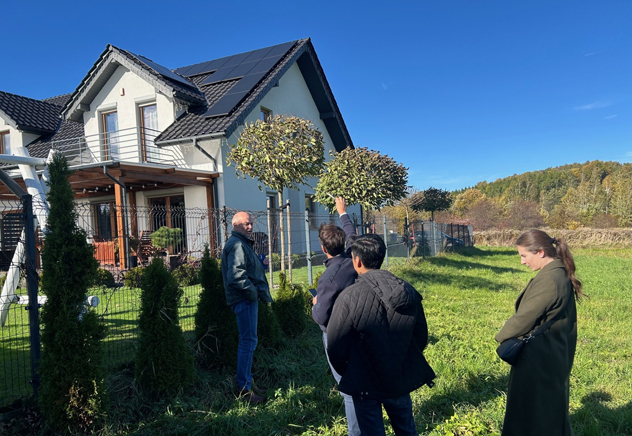
Frederick Research Center participates in the CoEnerBuild project, which aims to transform geographically distributed nearly-zero energy buildings into intelligent Virtual Power Plants for a sustainable energy future.
As electricity systems become increasingly advanced, traditional power grids are being upgraded into smart grids. Smart grids use digital technologies to improve the management of electricity production, distribution, and consumption.
This modernization is driven by:
- increased use of renewable energy sources (RES), such as solar and wind power,
- improved management of electricity demand,
- the widespread adoption of electric vehicles,
- increased deployment of energy storage systems (ESS), such as batteries.
In this evolving energy landscape, a Virtual Power Plant (VPP) can play an important role.
A Virtual Power Plant is a system that connects multiple small energy units (for example, buildings equipped with solar panels and energy storage systems) and manages them collectively as if they were a single large power plant.
Although an individual nearly-zero energy building (nZEB) represents a small energy unit for the electricity grid, multiple geographically distributed buildings can be connected and managed together. This creates a Building Virtual Power Plant (BVPP), which is perceived by the grid as a large-scale energy procumer as it both produces and consumes energy.
The CoEnerBuild project (“Buildings’ Virtual Power Plant towards Carbon-Neutral Electricity and Grid Resilience”) goes beyond traditional BVPP approaches by developing a central energy management system capable of:
- controlling how each building uses energy,
- managing energy flows within the BVPP,
- optimizing energy exchanges with the electricity grid,
- maximizing the use of renewable energy sources and energy storage systems.
An important innovation of the project is that the equipment installed in each nearly-zero energy building will be sized and designed by considering the needs and benefits of the entire Building Virtual Power Plant, rather than focusing solely on the individual building.
The project brings together six partners from five countries:
- Aristotle University of Thessaloniki (Greece)
- Frederick Research Center (Cyprus)
- Mineral and Energy Economy Research Institute, Polish Academy of Sciences (Poland)
- TwinIO Energy sp. z o.o. (Poland)
- INGENIERIA Y DISEÑO ESTRUCTURAL AVANZADO SL (Spain)
- Basaksehir Municipality (Turkey)
Dr Nicholas Christofides is coordinating the project on behalf of Frederick Research Center. FRC is responsible for developing the building and BVPP power requirements and equipment sizing model, as well as contributing to the development of the BVPP model. FRC will also contribute its expertise in smart grids, distributed generation, and load demand response.
For more information on the project, visit the official website.
The project EP/CETP/0923/0010 is implemented under the programme of social cohesion “THALIA 2021–2027”, co-funded by the European Union through the Research and Innovation Foundation.
IMAGE: Project consortium came together for its first in-person meeting in Poland in October 2025, marking a significant milestone in the project's collaborative journey ©CoEnerBuild

 View all articles