
 Search



EU-CONEXUS Alliance secures renewed funding from the European Commission


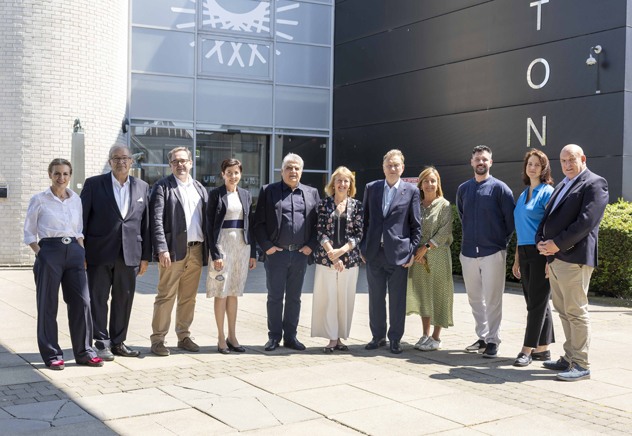
The EU-CONEXUS European University Alliance, of which Frederick University is a member, has been selected by the European Commission for renewed funding, joining a small number of European Universities alliances chosen to receive continued financial support.
The funding, provided through the Erasmus+ Programme, has been extended for an additional two years following a highly competitive evaluation process.
The European Universities initiative is one of the European Union's flagship initiatives for strengthening the European Higher Education Area and enhancing the global competitiveness of European universities. The renewed funding awarded to a select group of successful alliances, including EU-CONEXUS, aims to consolidate and further expand cooperation among partner universities, with a strong focus on joint educational programmes, student and staff mobility, research, and innovation.
Only 20 European University Alliances were selected for funding renewal. Among them are two alliances involving Cypriot universities, with Frederick University being the only private university in Cyprus included in this distinguished group.
Additional funding approved for the Joint Master Programme in Marine Biotechnology
A second major success was also announced during the same period. The European Commission approved a new €4.6 million funding package to provide scholarships for students enrolling in the EU-CONEXUS Joint Master Programme in Marine Biotechnology under the Erasmus Mundus Joint Masters (EMJM) initiative.
The scholarships cover tuition fees as well as living and travel expenses, enabling students from around the world to pursue a high-quality interdisciplinary master's programme in marine biotechnology.
The announcements coincided with the meeting of the EU-CONEXUS Rectors' Council in Waterford, Ireland, attended by Professor George Demosthenous, Rector of Frederick University, alongside meetings of the Alliance's Board of Directors, Student Council and External Advisory Board. The news was received with great enthusiasm by representatives from all partner institutions.
Professor George Demosthenous, Rector of Frederick University and member of the EU-CONEXUS Rectors' Council, commented:"We are particularly proud that both the impact of the EU-CONEXUS Alliance, in which Frederick University plays an active role, and our University's contribution to the European Union's ambitious vision for a stronger and more integrated European Higher Education Area have been recognised. This vision sees universities not merely as national institutions, but as interconnected European networks. For Frederick University, this renewed funding means even greater opportunities for international collaboration, joint degree programmes, student mobility, and research synergies. I warmly congratulate the entire EU-CONEXUS community on this outstanding achievement."
About EU-CONEXUS
EU-CONEXUS focuses on Smart Urban Coastal Sustainability, addressing the complex challenges faced by coastal cities through interdisciplinary education, research and innovation.
In addition to Frederick University, the Alliance brings together:
- La Rochelle Université (France)
- Agricultural University of Athens (Greece)
- Technical University of Civil Engineering Bucharest (Romania)
- Klaipėda University (Lithuania)
- Universidad Católica de Valencia "San Vicente Mártir" (Spain)
- University of Zadar (Croatia)
- South East Technological University (Ireland)
- University of Rostock (Germany)
During the evaluation process, the European Commission recognised EU-CONEXUS as a model alliance with a clear vision for smart and sustainable coastal urban development. The proposal was particularly commended for its successful transition from pilot activities to a well-established institutional alliance, the high level of collaboration among partner universities, and the quality of its governance structures, educational activities, mobility opportunities and engagement with local and regional communities.
 View all articles